

Water in video games is one of the most technically demanding things developers try to render convincingly, and the history of that effort is more interesting than it sounds. Not because game water is particularly close to real water, because it is not, but because the gap between what real water physics requires computationally and what game hardware can deliver in real time has driven some of the most creative approximation work in software engineering.
1. What Real Water Physics Actually Requires
Real fluid behavior is described by the Navier-Stokes equations. Solving them fully for a real-time game environment is not feasible on consumer hardware. The equations describe every interaction between fluid particles in a way that scales with the number of particles involved, and a lake in a game contains an effectively infinite number of them. Full simulation is not the approach.
What game developers use instead are simplified models that produce visually convincing approximations at a cost the hardware can sustain. Height field simulation treats the water surface as a deformable membrane rather than a true volume. The surface responds to objects entering it, ripples spread outward from disturbance points, and the whole thing runs fast enough to update every frame. It is not water. It is a very good picture of water that behaves enough like water to be convincing.
2. Where True Fluid Simulation Does Appear
Some game systems implement more accurate fluid physics for specific scenarios. Particle-based fluid simulation treats each unit of fluid as an individual element interacting with neighbors according to simplified fluid dynamics rules. The results are more physically accurate for scenarios like water flooding through a breach in a hull or flowing around complex geometry. The computational cost is higher, and the applications tend to be contained rather than open-world.
Read More: WHAT IS A SOLAR BATTERY? POWERING HOMES, ROAD TRIPS & WILDERNESS CAMPS
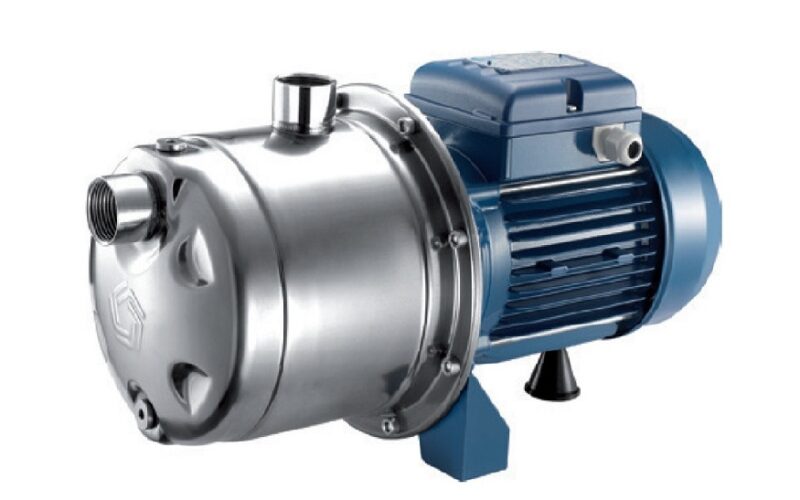
The physics that game developers are approximating and the physics that pump engineers work with directly share the same foundation. Pumpbiz works with the real-world application of fluid dynamics: pressure ratings, flow rates, head measurements, viscosity factors. These are the same variables that determine how a digital waterfall behaves in a game environment, except that in engineering they are not approximated. They are measured, specified, and matched to equipment that has to perform within them reliably rather than just look convincing.
3. Pressure and Bernoulli in Both Contexts
Bernoulli’s principle describes the relationship between fluid velocity and pressure in a moving fluid. It governs why water flows the way it does around obstacles, why pressure drops as flow rate increases through a constriction, and why the spray pattern of a nozzle looks the way it looks. Game developers approximate these relationships visually. Hydraulic engineers quantify them precisely.
Read More: IN BANGALORE, WHERE CAN I FIND HIGH-QUALITY ALUMINUM WINDOWS?
The underlying principle is the same. The implementation is either artistic approximation aimed at entertainment or engineering calculation aimed at reliability, depending on whether the water is pixels or actual water.
Conclusion
Game water is an approximation of real fluid physics constrained by real-time rendering requirements. The principles being approximated are the same ones governing real hydraulic engineering. The connection between virtual water and pump design is the physics both disciplines are working with, expressed very differently depending on whether performance or accuracy is the goal.